

FAMU Launches First-Ever Human Clinical Trials
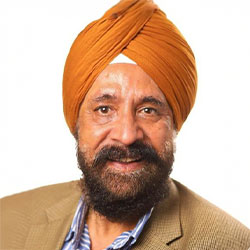
Tallahassee, FL – Dr. Mandip Sachdeva, a professor at Florida Agricultural and Mechanical University is in the process of bringing the first human clinical trials to the campus.
The professor will be testing a drug already on the market. For this substance does not have that much data available for being effective for the condition neuropathy, a diagnosis involving nerve damage – this is the main objective for Sachdeva’s findings.
With this being the first for the HBCU, Dr. Sachdeva’s research would be a big achievement for the university. After more than two years of analysis and testing on animals – the human clinical trials are set to begin.
He explained that he had to begin the procedures after thorough testing on animals to check the safety of the trials. The reason for this was that the approval process is the most extensive part of the operation. Dr. Sachdeva mentioned the FDA (Food and Drug Administration) required numerous data and safety reviews at every stage. “FDA demands a lot of documentation, a lot of testing to be done.” He said. “So they look at all that and they ask you a question, you go back and forth – it takes a year and a half.”
Sachdeva’s trials will be a collaborative effort, involving Florida State University’s
College of Medicine and Tallahassee Memorial HealthCare (TMH). TMH will be allowing
their patients to participate in the trials.
Getting the partnerships was not an easy task but it was important for Sachdeva to
bring the first human clinical trials to FAMU. “So it's the first in the history of
FAMU and it took a lot of work.”
After the approvals came through, the next step was the patient selecting process. Picking the patients provided by the access at TMH’s is quite rigorous. For selecting patients they can’t be pregnant or have any health issues that can compromise the results.
The observance of patients’ behavior and health will be the data. "We'll be looking mostly at the patients' behavior, are they feeling better? Are they sleeping better?" Sachdeva said. “All data will be recorded, but we'll get feedback. And then we also bought instruments which check the nerve conduction flow.”
Sachdeva mentioned that the selection will take place in one to two months, as the holiday season is his biggest concern, as patients travel for the season which can hinder the trials.
FAMU pharmacy students will be providing support. “Testing in the lab, FAMU students will help with getting the data generated for the IND applications” he said. Their involvement is an important part of what makes the trial significant for the university.
From working weekends and late evenings as the process takes time, Sachedva's efforts for the project are to bring the science and learning of human clinical trials to the campus culture.
The FAMU professor has hope for the outcome. “Once you publish, everybody wants to see what data you got. And once we do that, we get experience … people know that we can deliver.” he said. “So then from the data we get, good or bad, it doesn't matter. We have only in mind to plan some other trials, or people may come to us.”
Not only does Sachdeva want to create Rattler history … he wants to make a point.
“Right now, people are, [saying] these guys can't do it, it’s too difficult. But we are showing that you can do it anywhere you want if you have desire, you can do it!”
Sachdeva is now in the participant recruitment phase and expects patient selection to begin within the coming months.
By Kazon Allen
Florida A&M University School of Journalism and Graphic Communication | Graduating Class of 2026 | FAMU CoPPS, IPH Intern | Truist Jobs Initiative | FAMU Career Explorer's Experience| Eta Gamma Chapter of TAU SIGMA National Honor Society at FAMU | Journey Magazine Social media & Multimedia team | Kazon1.Allen@famu.edu | (786) 663-2427